Blog: Watch M10.1 Video!
1) Consider your workplace or a workplace of one of your family members. Are there chemical, biological, radiological or ergonomic issues? Using the industrial hygiene hierarchy of controls, how might you address the issues? How are they being addressed in reality?
Working in the hospital, there are multiple chemical, biological, radiological or ergonomic issues present. The industrial hygiene hierarchy of controls is as pictured:
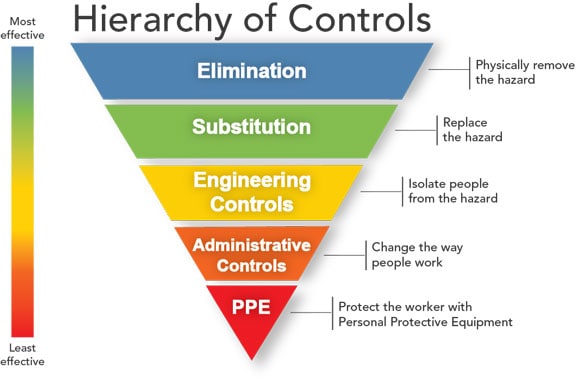 Here are some examples of how the hierarchy of controls is used to address some issues that may be present in a hospital.
Chemical - working with chemotherapy medications or other hazardous medications require the use of PPE. Administrative controls also play a part, as nurses learn how to handle, administer, and dispose of these meds.
Biological - working with bodily fluids such as blood requires using PPE and training on how to handle these products. PPE is also used when patients are isolated with certain infectious diseases, such as TB.
Radiological - when taking bedside X-rays, nurses or techs wear lead vests for protection, this is like PPE. Administrative controls also play a part as workers are trained on how to handle this. Engineering controls may also be incorporated as some places are isolated to radiation, as there are parts of the hospital that do MRIs, CTs, and X-rays, and the workers can be in a different room during this test.
Ergonomic - most of the beds in the hospitals nowadays are electronic and can move up and down. Doing this can help to reduce injuries when moving patients and/or providing care to them. This can be considered substitution as high tech beds replaced regular beds.
Working in the hospital, there are multiple chemical, biological, radiological or ergonomic issues present. The industrial hygiene hierarchy of controls is as pictured:
Chemical - working with chemotherapy medications or other hazardous medications require the use of PPE. Administrative controls also play a part, as nurses learn how to handle, administer, and dispose of these meds.
Biological - working with bodily fluids such as blood requires using PPE and training on how to handle these products. PPE is also used when patients are isolated with certain infectious diseases, such as TB.
Radiological - when taking bedside X-rays, nurses or techs wear lead vests for protection, this is like PPE. Administrative controls also play a part as workers are trained on how to handle this. Engineering controls may also be incorporated as some places are isolated to radiation, as there are parts of the hospital that do MRIs, CTs, and X-rays, and the workers can be in a different room during this test.
Ergonomic - most of the beds in the hospitals nowadays are electronic and can move up and down. Doing this can help to reduce injuries when moving patients and/or providing care to them. This can be considered substitution as high tech beds replaced regular beds.
2) What might be the barriers to workers exercising their rights to a healthy and safe workplace?
Some barriers that may be present for workers include being unaware of their rights and what hazards they face. While they may receive training and an MSDS, some workers may not be confident in knowing what safety hazards they face or how to report them. In addition to this, some might also feel like they may be reprimanded for reporting an issue, as they may not know that this can be done anonymously. Or, they may not even know how to report it in the first place.
Hi Loren,
ReplyDeleteI think there are many workers out there that are unaware of the hazards they face. In reality, most people don't take the time to really understand the MSDS and forget many aspects of training when actually on the job. Not being aware of what one is exposed to can be a major barrier as it would prevent someone from even exercising their rights to a healthy and safe workplace.
-Ashley